Visual Art and the Architecture of Consciousness
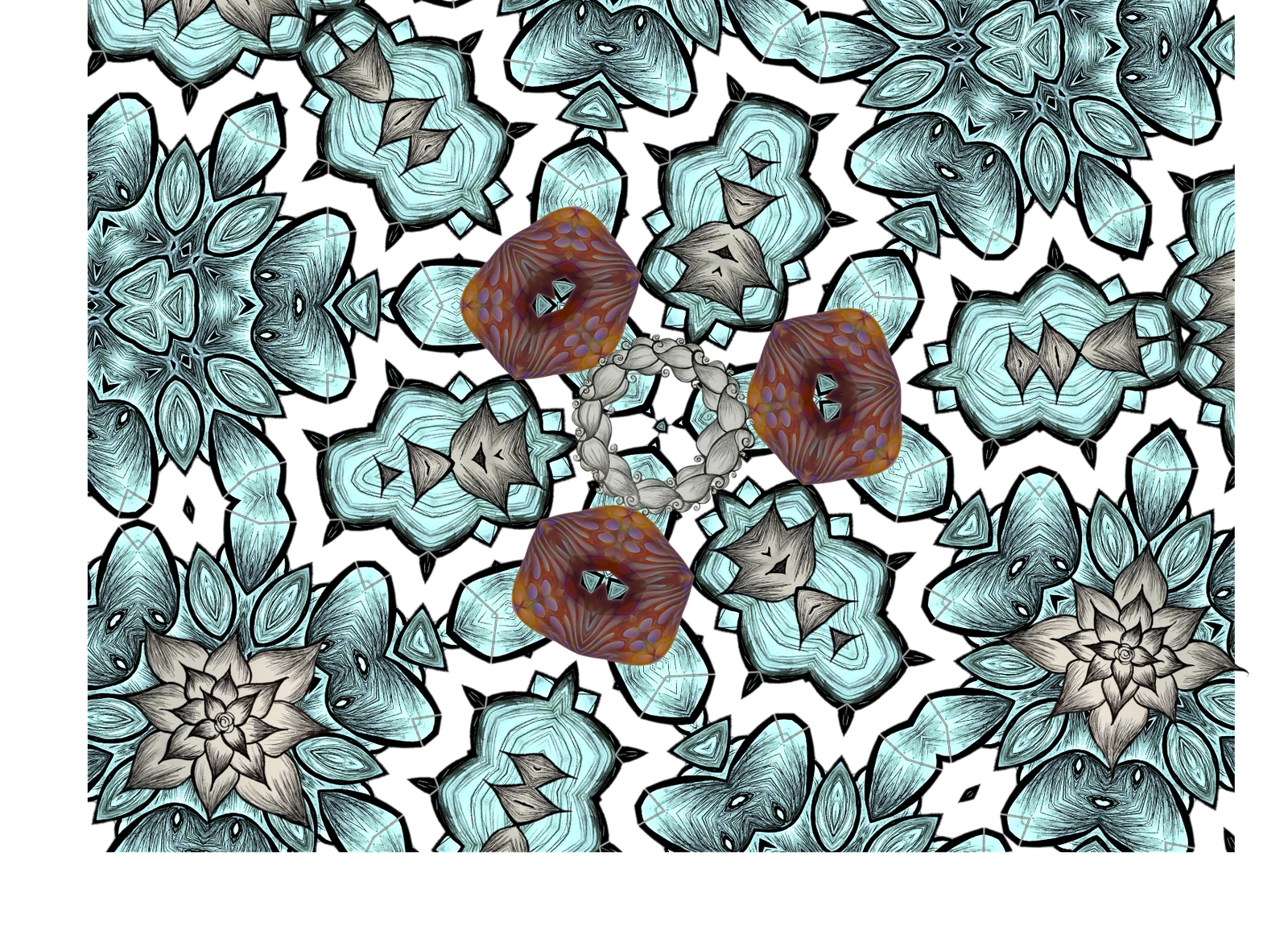
Metacognition, Pattern Manifestation and the Emergence of Symbolic Meaning*
I. The Perceptual Mind
Metacognition, broadly defined as the awareness, examination and regulation of one's own cognitive processes, provides an intriguing framework through which to explore both the creation and appreciation of visual art.
While cognition encompasses the processes through which we perceive, interpret and understand, metacognition introduces another dimension: the capacity to observe and contemplate these processes themselves.
Consider the seemingly ordinary experience of discovering a recognizable form within the grain of wood, the formation of clouds or the otherwise abstract arrangement of colors and shapes. This phenomenon, known as pareidolia, illustrates the active participation of the mind in the construction of perceptual meaning.
Similarly, the principles of Gestalt psychology describe our tendency to organize independent visual elements into coherent structures through proximity, similarity, continuity and other perceptual relationships.
Predictive processing offers a further theoretical perspective, suggesting that perception involves a continuous interaction between incoming sensory information and the expectations generated through previous experience.
Collectively, these concepts challenge the notion of perception as an entirely passive reception of external reality.
From an artistic perspective, this introduces a particularly interesting distinction between the discovery of imagery and its construction. To what extent are we discovering structures inherent within our environment, and to what extent are we participating in their manifestation through the architecture of our own consciousness?
Perhaps the exploration of visual art becomes considerably more profound when we begin to examine not only the imagery itself, but the cognitive and emotional mechanisms through which it acquires beauty, significance and meaning.
II. The Discovery of Order and the Manifestation of Beauty
The experience of aesthetic discovery is both subjective and dynamic, varying not only between individuals but within the individual according to mood, experience and the nature of the subject itself.
Although I frequently gravitate toward order and symmetry, I find abstract beauty especially compelling. These inclinations are not necessarily contradictory. Abstract imagery may possess an underlying structural coherence without being representational or immediately comprehensible.
The recognition of order within imagery can be satisfying in itself. Yet there is perhaps an equally compelling satisfaction in the gradual discovery of order within complexity, ambiguity or apparent disorder.
While recognizable patterns may satisfy certain perceptual expectations, deviations from those patterns introduce novelty, intrigue and the possibility of further discovery.
The interplay between predictability and unpredictability may therefore constitute an important dimension of aesthetic experience. A structure need not be symmetrical or immediately intelligible to possess beauty. Indeed, its ambiguity may contribute to its fascination.
Abstraction affords the observer a particular freedom in this regard. Without the constraints of a predetermined subject, consciousness is permitted greater participation in the construction of perceptual meaning.
From a metacognitive perspective, it becomes interesting to observe the variability of our own aesthetic inclinations. Why might a particular structure captivate us on one occasion while eliciting relatively little interest on another?
Although the imagery itself may remain unchanged, the psychological conditions through which we perceive it are continually evolving.
Beauty, in this respect, may be understood not exclusively as a property of imagery, but as a dynamic relationship between imagery and the perceiving consciousness.

III. The Threshold Between Abstraction and Symbolism
Within the exploration of abstract imagery, there occasionally emerges a recognizable form or symbolic association that was neither predetermined nor consciously intended.
While pareidolia provides a familiar illustration of this phenomenon, the emergence of symbolic meaning may involve considerably more complex associations between perception, imagination, memory and experience.
From the perspective of the artist, the recognition of such imagery may represent a crucial threshold within the creative process. One is presented with the possibility of pursuing the emerging form, emphasizing its recognizable characteristics or preserving the ambiguity from which it arose.
My inclination toward any of these possibilities is largely dependent upon the particular moment.
The same emerging structure, encountered under different psychological or emotional conditions, might inspire entirely different creative decisions.
There is an important distinction between the deliberate incorporation of symbolism and the discovery of symbolic significance through artistic exploration. In the former, imagery becomes a vehicle for the expression of an existing concept. In the latter, imagery becomes a means through which a concept may emerge.
The creative process thus becomes an interplay between intention and discovery, in which the artist alternates between the roles of creator and observer.
The preservation of ambiguity introduces yet another dimension. By resisting the inclination to fully articulate an emerging form, the artist may allow subsequent observers to participate in their own perceptual discoveries, potentially arriving at interpretations quite different from those of the artist.
In this respect, the artwork may become a participatory experience extending beyond the consciousness of its creator.
Through metacognitive awareness, we may become increasingly conscious of these thresholds and the conditions influencing our creative decisions. The significance lies not necessarily in controlling the outcome, but in recognizing the processes through which the outcome manifests.
IV. The Autonomous Imagery of the Mind
Pattern recognition and manifestation are not exclusively dependent upon external visual stimuli. The mind itself possesses the capacity to construct, manipulate and experience imagery in the absence of corresponding sensory information.
Internally generated imagery may involve the repetition, rotation, expansion or transformation of geometric structures. Such activity may be deliberately initiated and sustained, or it may emerge spontaneously with seemingly little conscious direction.
An interesting manifestation of the latter occurs during hypnagogia, the transitional state between wakefulness and sleep, in which patterns, colors, recognizable forms and spontaneously evolving scenes may become apparent.
The experience of geometric repetition, apparent motion and spatial transformation can also occur under various conditions of altered visual processing.
These phenomena invite contemplation of the extent to which the architecture of our perceptual mechanisms influences the very nature of the imagery we experience.
Beyond their spontaneous manifestation, internally generated patterns may also serve as a form of cognitive play.
Much as a musician might engage in improvisation without the intention of composing a particular piece of music, the mind may derive intrinsic satisfaction from the construction and manipulation of spatial relationships.
There need not be an identifiable objective or predetermined outcome. The activity itself may constitute the reward.
Another possibility is that repetitive mental imagery can function as a form of visuospatial self-regulation, providing a relatively predictable focus of attention when external stimulation is limited or the mind is otherwise unsettled. In this respect, its function might sometimes resemble that of doodling, rhythmic movement or the repetition of a mantra.
These potential functions need not be mutually exclusive. The same mental activity may involve creative exploration, emotional regulation and aesthetic satisfaction, although repetitive imagery can also become intrusive or distressing.
In my own experience, the relationship between conscious intention and spontaneous manifestation is continually fluctuating.
Sometimes it is a struggle to interpret the message or convey the inner feelings, and other times the music plays the band.
Perhaps it is within this oscillation between deliberate intervention and spontaneous emergence that some of the most compelling creative experiences occur.
The artist is no longer exclusively directing the creative process, but is also responding to its unfolding.
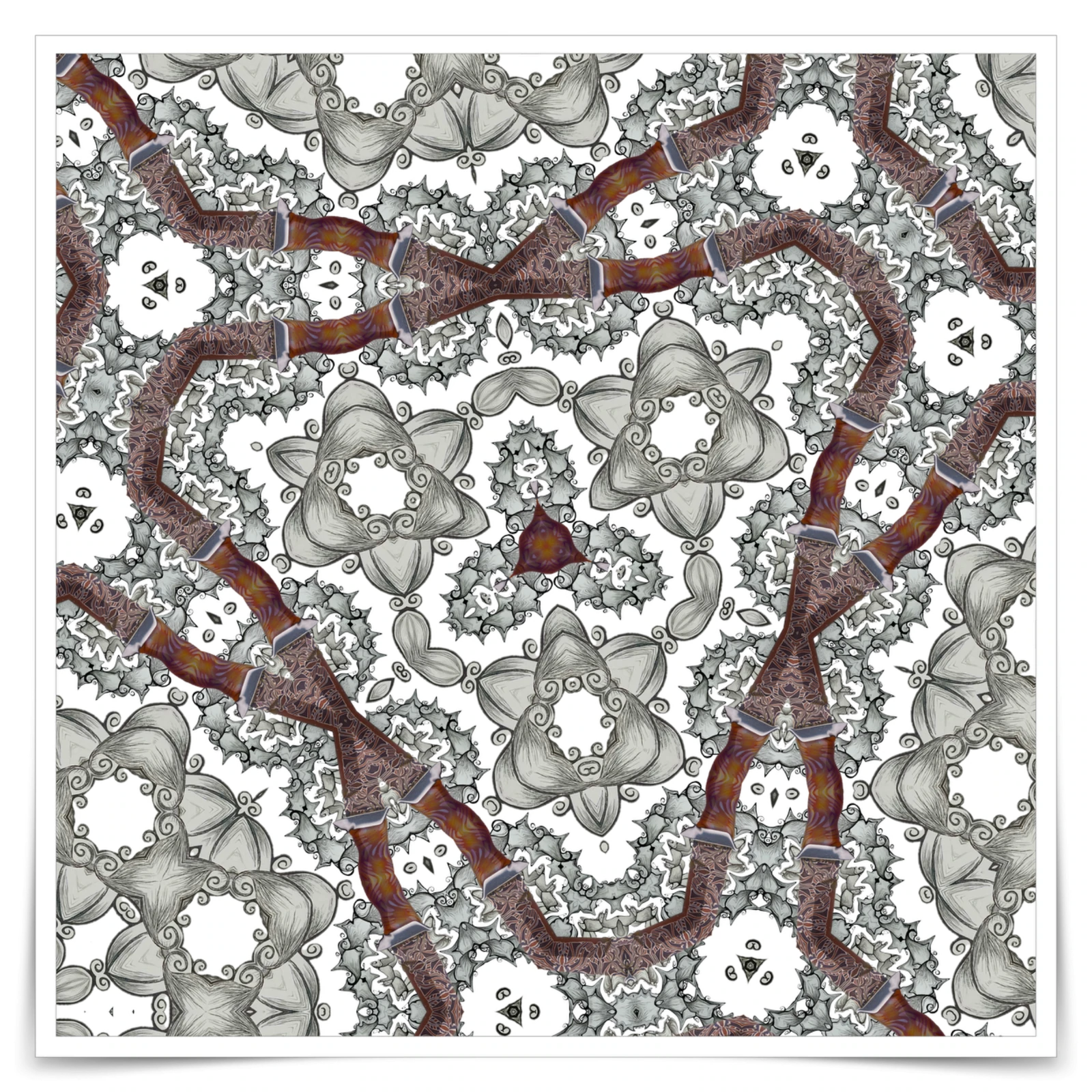
V. The Emotional Architecture of Perception
The involvement of emotion and accumulated experience introduces a further layer of complexity into our relationship with imagery.
A particular arrangement of forms may evoke tranquility, apprehension, nostalgia, fascination or discomfort without possessing any obvious representational content.
These responses may arise through associations with previous experiences, cultural influences, memories or the psychological disposition of the observer at that particular moment.
However, the relationship between imagery and emotion is not exclusively unidirectional.
While our emotional condition may influence the imagery to which we gravitate and the meanings we derive from it, the perception and construction of imagery may in turn influence our emotional condition.
The psychological relationship becomes reciprocal.
Through artistic practice, internally experienced emotions may acquire an externally observable form. Feelings that are difficult to articulate verbally may find expression through color, geometry, texture, contrast or spatial relationships.
The resulting imagery then becomes a new object of contemplation, providing an opportunity to encounter aspects of our own experience from a different perspective.
This may be particularly significant when the imagery manifests without a fully articulated intention. The artist may discover an emotional association only after the imagery has begun to emerge.
Importantly, such an association need not constitute the revelation of some hidden psychological truth. Its significance may lie instead in what it invites us to contemplate.
From the perspective of psychological well-being, it becomes interesting to consider whether the conscious examination of these associations might encourage greater flexibility in our interpretations, a greater tolerance for ambiguity and a more inquisitive relationship with our emotional experiences.
Artistic exploration is not necessarily therapeutic in every circumstance, nor is it a substitute for psychological treatment. Nevertheless, its capacity to engage perception, emotion, imagination and introspection simultaneously makes it a particularly interesting medium through which to examine the nature of subjective experience.
VI. The Observer Observing the Observer
In 1921, Swiss psychiatrist Hermann Rorschach introduced a psychological assessment involving the interpretation of ambiguous inkblot imagery.
The underlying perceptual phenomenon is particularly relevant to this discussion. Presented with an identical visual stimulus, individuals may discover remarkably different forms, associations and organizational relationships.
Although the clinical significance and validity of individual Rorschach measures vary, the broader philosophical implications of the experience deserve consideration.
What is it that we are discovering within such imagery?
Are we recognizing characteristics inherent within the structure itself, or are we encountering manifestations of our own perceptual tendencies, emotional associations and accumulated experiences?
Perhaps we are participating in both.
What interests me particularly is the introduction of metacognition into this experience. Beyond the immediate recognition of a particular form lies the possibility of observing the very process through which that recognition occurred.
Why did this particular interpretation emerge? What other possibilities might exist? To what extent was the interpretation influenced by expectation, emotion or previous experience?
Contemporary psychology explores a related capacity through the concept of decentering: the ability to observe one's internal experiences without becoming entirely identified with their content.
There is a distinction between experiencing a thought and recognizing that one is experiencing a thought, just as there is a distinction between perceiving an image and recognizing one's participation in its perceptual construction.
The significance of this distinction may extend considerably beyond artistic appreciation.
Throughout our lives, we encounter circumstances of varying degrees of ambiguity. We discover patterns, establish associations, assign meaning and develop emotional responses to our interpretations.
As in the construction of visual art, there may be crucial thresholds at which we reinforce an emerging interpretation, entertain alternative possibilities or permit uncertainty to remain unresolved.
An awareness of these thresholds may have profound relevance to the development of attitude, psychological flexibility and our relationship with the world around us.
This is not to suggest that external reality is entirely subjective, but that our experience of it is inseparable from the perceptual and psychological mechanisms through which we encounter it.
Through the exploration of visual art, we may become increasingly aware of those mechanisms.
Consciousness manifests imagery through which it may subsequently contemplate aspects of its own operation. The creative process becomes recursive, permitting the observer to become an object of observation within the experience itself.
Perhaps the greatest significance of artistic exploration lies not exclusively in the imagery we create, but in what the process of its manifestation may reveal about the nature of the consciousness through which it emerged.
And perhaps, through an increased awareness of how we participate in the construction of imagery, we may become more aware of how we participate in the construction of our experience of life itself.

References and Further Reading
- Flavell, J. H. (1979). Metacognition and cognitive monitoring: A new area of cognitive-developmental inquiry. American Psychologist, 34, 906–911.
- Wagemans, J., et al. (2012). A century of Gestalt psychology in visual perception: I. Perceptual grouping and figure-ground organization. Psychological Bulletin.
- Clark, A. (2013). Whatever next? Predictive brains, situated agents, and the future of cognitive science. Behavioral and Brain Sciences, 36, 181–204.
- Liu, J., et al. (2014). Seeing Jesus in toast: Neural and behavioral correlates of face pareidolia. Cortex, 53, 60–77.
- Pearson, J., Naselaris, T., Holmes, E. A., & Kosslyn, S. M. (2015). Mental imagery: Functional mechanisms and clinical applications. Trends in Cognitive Sciences, 19, 590–602.
- Ghibellini, R., & Meier, B. (2023). The hypnagogic state: A brief update. Journal of Sleep Research, 32, e13719.
- Holmes, E. A., & Mathews, A. (2010). Mental imagery in emotion and emotional disorders. Clinical Psychology Review, 30, 349–362.
- Mihura, J. L., Meyer, G. J., Dumitrascu, N., & Bombel, G. (2013). The validity of individual Rorschach variables: Systematic reviews and meta-analyses of the comprehensive system. Psychological Bulletin.
- Bernstein, A., et al. (2015). Decentering and related constructs: A critical review and metacognitive processes model. Perspectives on Psychological Science, 10, 599–617.
Related Peaselburg essays
AN OPEN CONVERSATION
thoughts, questions & other perspectives...
Have an interpretation, a challenge, or an unexpected connection to share? Add it to the conversation. Thoughtful disagreement is welcome. Comments appear publicly only after the artist reviews them.
So… years ago as a wild adolescent I had a psychedelic trip where I climbed atop a marble mortuary. In my delirium I observed by moonlight the polished marble face with its detailed depth at an angle whereby it came into focus suddenly. My mind in it’s psychedelic state turned the detail of the marble depth into a pattern that in cyclic motion became a kaleidoscopic pattern that interconnected and expanded as I focused out from the small area I had initially seen come into focus. It initially seemed like some fusion of an insect like an ant marching or circling aspect of the marble pattern (which it might in reality have been) and the orbit of electrons around an atomic orbit in some quantum architecture… but this quickly became a complex interlocking pattern that expanded out into a greater connected moving dynamic pattern as I focused out more to the large marble face. There was something kaleidoscopic but with much more complexity and dynamic symmetrical motion within it that left me speechless and begged for deeper understanding and enlightenment. In recent decades I find myself often in times of wait or mild anxiety or even as a meditation or before drifting off to sleep doing a strange thing in my mind. I will make figure 8’s or connect different shapes or patterns in my mind almost like something driven and fastidious from a tedious discipline or primal hunter gatherer satisfaction. It’s strange my mind will gravitate towards a busy quiet mantra like that and I often reflect on why and what that means.